

About Us
Discover a destination where modernist architecture meets ancient Red Sea history. Eritrea offers a unique blend of breathtaking landscapes, from the Art Deco streets of Asmara—a UNESCO World Heritage site—to the pristine, untouched waters of the Dahlak Archipelago. At Dahlak Tours, we don't just organize trips; we curate immersive journeys that treat every visitor as an honored guest in our beautiful nation.
Gallery

Search
DAHLAK TRAVEL & TOURS
Discovering Massawa: Eritrea’s Historic Port City and Gateway to the Red Sea

-
 Dahlak Tours
- Last Updated: November 9, 2026
- 11:48 pm

Since most Eritrean itineraries are built around Asmara, I treated Massawa as the add-on. Sure, Asmara was the reason for the trip, and the coast was meant to fill the gap before the flight home. That undersells it. Massawa is a Red Sea port that has been ruled by the Ottomans, the Egyptians, the Italians and the British, and the walls still show it.It’s also hot, worn and slow, and the contrast with the capital is the point.
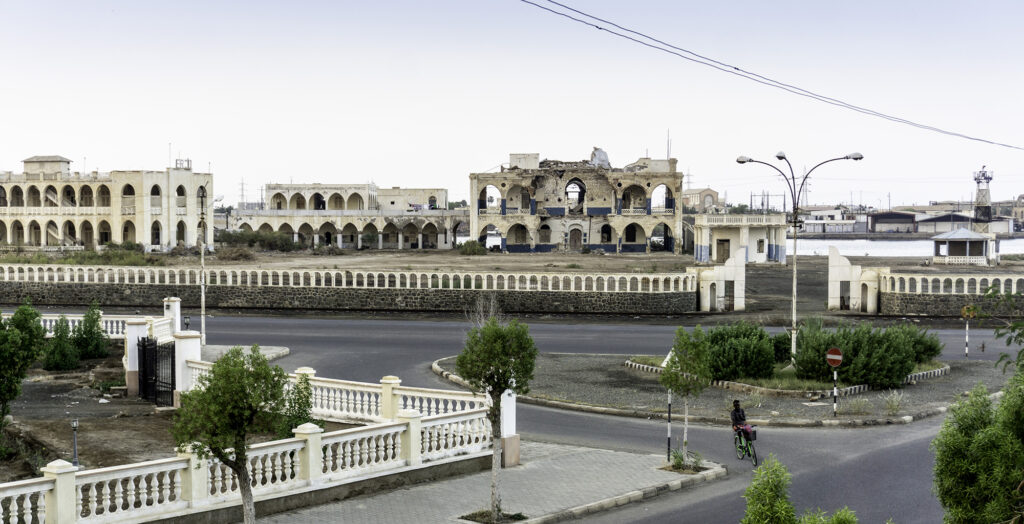
Massawa vs Asmara: You Feel It Within Hours
Asmara sits above 2,300 metres, and the air is cool and dry. Temperatures hover between about 18 and 25 degrees all year. Massawa is at sea level on the Red Sea, and the difference hits you on the way down, to quote the shift feels like “three seasons in three hours”. Summer temperatures are often reported above 40°C. The Italians felt the same way: settlers preferred Asmara for the cooler air and the lack of malaria, and the colonial capital moved up there around the turn of the 20th century.
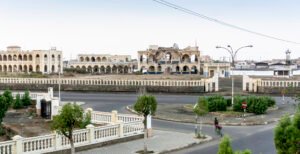
The two cities don’t look alike either. Asmara was planned, with wide boulevards and 1930s modernist buildings. UNESCO inscribed it in July 2017. Massawa grew on its own, across islands linked by causeways, with coral-stone houses, narrow alleys and carved doorways. It has no UNESCO listing oddly enough, despite it being centuries older.
Language shifts too. In Asmara I got by with English in most tourist-facing places. On the coast, Arabic and Tigre are more common than Tigrinya. The pace drops as well. Massawa is a port town and acts like one.
The biggest difference is upkeep. Asmara is well kept. Massawa isn’t, and a lot of the old town is shuttered, propped up or in ruins.
A Short History of Massawa
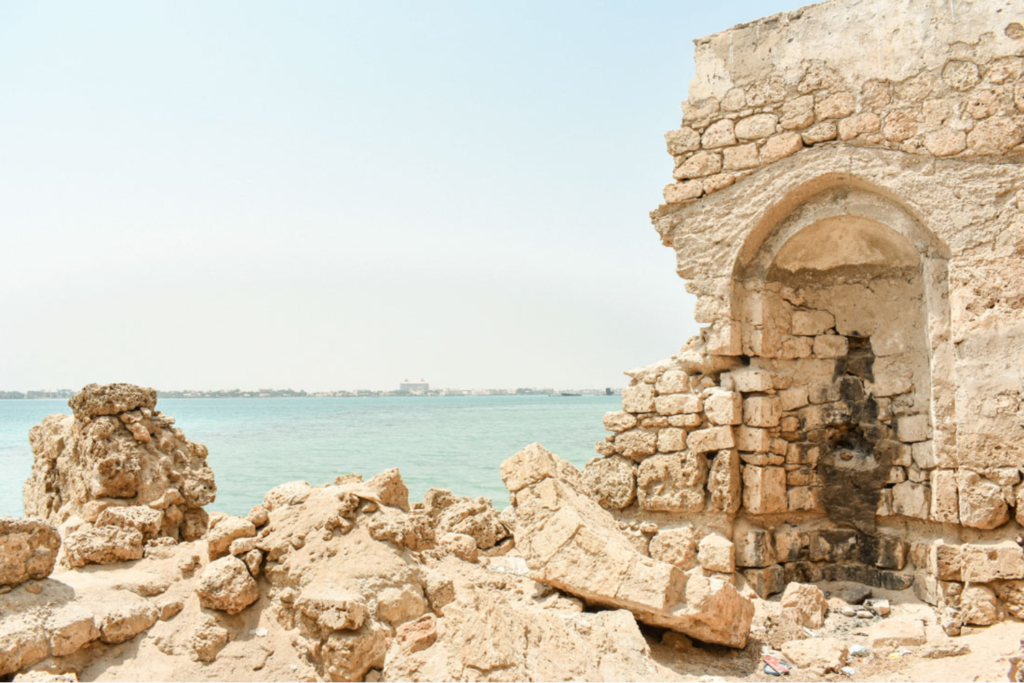
The Ottomans took Massawa in 1557 and built much of the old town on what’s now called Massawa Island, or Batsi. They pushed inland but never conquered the rest of Eritrea. The Egyptians ruled from 1865 to 1885, then the Italians took over, and Massawa served as the capital of the new colony before the government moved to Asmara. The British occupied it in 1941.
Two events shaped what you see today. A major earthquake in August 1921 damaged much of the town and the harbour. The Italians rebuilt, kept the street pattern and largely copied the old style, and the port was fully restored by 1928. Then in February 1990, Eritrean forces took Massawa in a three-day offensive called Operation Fenkil. Ethiopia answered with air strikes on the city, and some of that damage was never repaired.

What I’d Look For as a History Buff
The old town on Batsi. This is the core. Look for coral-block houses, wooden sunshades over the windows, and doorways carved with inscriptions. Because the Italians rebuilt in the older style after 1921, Ottoman and Italian work sit side by side and I often couldn’t tell them apart.
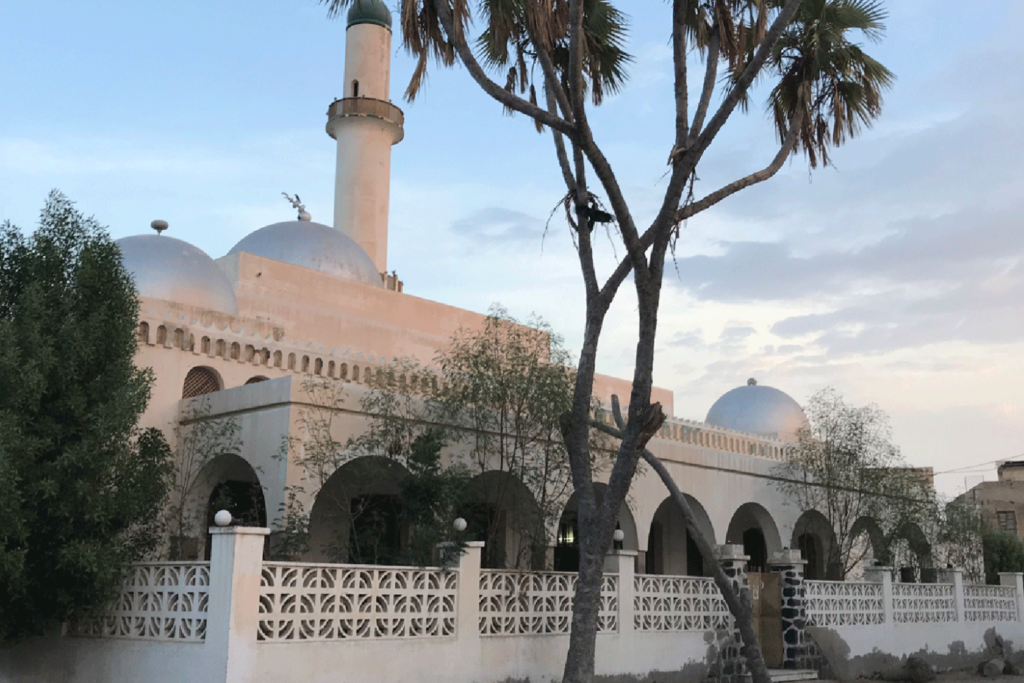
Sheikh Hanafi Mosque. Reportedly around 500 years old, and one of the oldest in Eritrea. It’s known for its stucco work and a Murano glass chandelier. Dress modestly, and let your guide tell you when to go in.
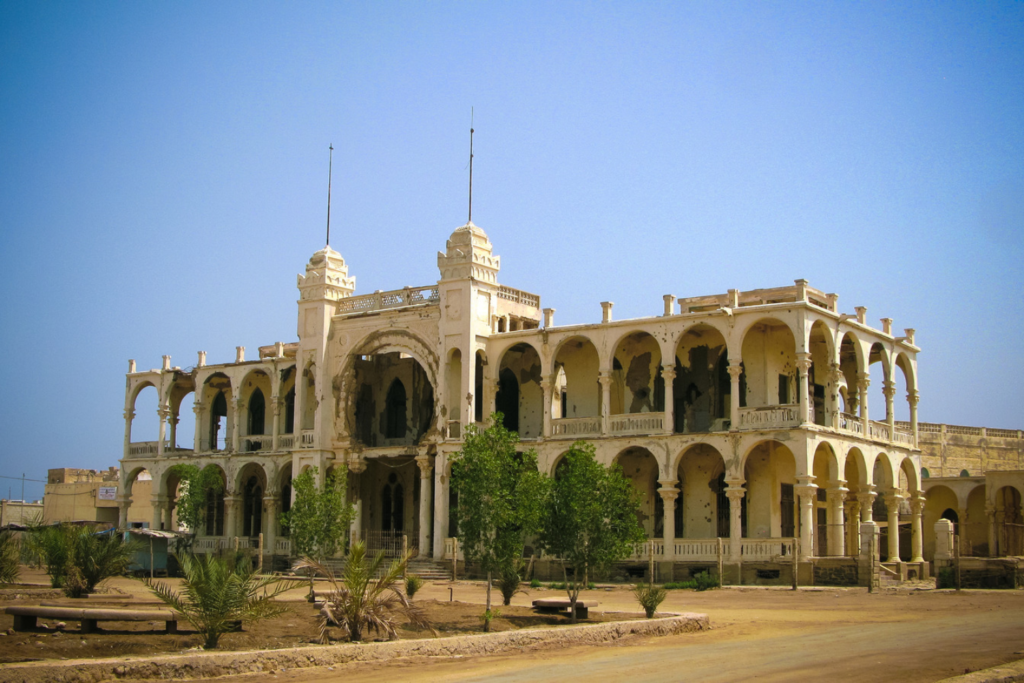
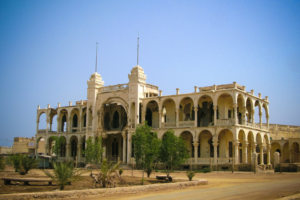
The palace. Guides call it the Turkish or Imperial Palace. Accounts differ on its origins. The Ottomans are credited with an earlier palace, but the ruin you see dates to the Egyptian period in the 1870s. Haile Selassie later used it as a residence, and it was badly damaged in 1990. It’s rough, and that’s part of why it sticks with you.
Taulud Island. The Italian administration put its offices and residences here, on wider and straighter streets than the old island. Look for 1920s buildings like the former Banca d’Italia and faded Italian-era signs.
The war memorial. A memorial with tanks stands in the town centre, and Fenkil is celebrated every February. The battle is part of Eritrea’s national story, so it comes up in conversation.
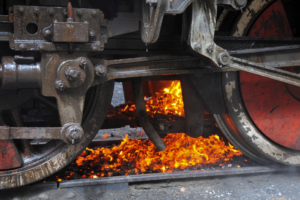
The railway. The Italians built the line from Massawa up to Asmara through Ghindae. The restored steam train only runs occasionally, so ask if one is scheduled.
Adulis.About 70 km south of Massawa, this ancient port was a working trade hub by the 7th century BC. Most of it is still underground and there’s almost no signage. Go with a guide, because without one it’s just open ground.
The Parts Nobody Mentions
- The heat is the main event. Plan walking for the morning and rest at midday. Carry more water than you think you need. I packed for Asmara’s weather and wished I hadn’t.
- Cash. Bring nakfa. Card payment is close to non-existent outside Asmara, and ATM s aren’t reliable.
- Photography. Massawa has a working port and a naval base. Ask your guide before pointing a camera at the harbour or anything military.
- Pace. There’s no big attraction to tick off. It’s walking, looking and sitting in the shade. One day covers the old town. Two is better, and I’d have taken more.
Do You Need a Visa for Eritrea?
Yes, almost everyone does. There are two routes. You can apply through an Eritrean embassy or consulate in your own country. Or, where it’s available for your nationality, a licensed local operator can issue an invitation letter that you show for a visa on arrival at Asmara airport. Either way, start early. We recommend at least six weeks. Rules change, so confirm the current position for your passport. Our visa and permit page has the details.
The Massawa permit is separate. Anything beyond roughly 25 km outside Asmara needs a permit for each destination. You apply one day in advance at the Ministry of Tourism on Harnet Avenue, and it costs around 50 nakfa. You can’t apply from abroad. Dahlak Tours handles all of this for you.
When to go
Best is October to April. The lowland heat is manageable and the highlands are comfortable. July and August are possible, but at sea level they’re the hardest months.
What I Didn’t Love
The humidity. I’d go in October or later next time. The museum in Asmara was forgettable, and the tank graveyard sat heavy on me for the rest of the day. Massawa is also underserved by a single day. I wanted longer on Green Island, and the schedule didn’t allow it.
Would I Go Back?
Yes, for longer. If you want to build a trip like this, get in touch with Dahlak Tours and they will sort the visa support, the permits and the transport before you land.
Location
Massawa
Recent Blogs
Frequently Asked Questions
You need an Eritrean visa to enter the country. Most travellers get it through an embassy or, where eligible, on arrival at Asmara airport with an invitation letter from a licensed operator. Apply at least six weeks before travel.
Massawa is a hot, humid, sea-level port with Ottoman, Egyptian and Italian layers and a worn, unrestored feel. Asmara is a cool, high-altitude, planned modernist city and a UNESCO site.
One day covers the old town. Two lets you add Green Island or a day trip to Adulis without rushing.
October to April. July and August are the hardest months at sea level.
Not reliably. Bring cash in nakfa for the whole trip.
Yes, having a guide (or at least traveling with a local driver and operator) is highly recommended for securing permits, learning the history and navigating the photography rules, safe travel and especially to bridge the language gaps.
Massawa is at sea level on the Red Sea, and summer temperatures are often reported above 40°C. Plan walking for the morning, rest at midday and carry more water than you think you need.
The Ottomans took Massawa in 1557 and built the old town on Massawa Island, or Batsi. The Egyptians ruled from 1865 to 1885, then the Italians took over, and the British occupied it in 1941.
The old town on Batsi, with coral-block houses, wooden sunshades and carved doorways, plus the Sheikh Hanafi Mosque, reportedly around 500 years old, and the palace ruin.
Ask your guide first. Massawa has a working port and a naval base, so do not point a camera at the harbour or anything military without checking.
Pack for the heat, not for Asmara's cooler weather. Carry plenty of water and cash in nakfa, and dress modestly for the Sheikh Hanafi Mosque.
Pack for the heat, not for Asmara's cooler weather. Carry plenty of water and cash in nakfa, and dress modestly for the Sheikh Hanafi Mosque.

22
Years of local experience


Licensed by the State of Eritrea, Ministry of Trade and Industry. Licence ASL00031590. Registration ASC00023767.
Dahlak Tours © 2026 All rights reserved. Powered by Debishtech