About Us
Discover a destination where modernist architecture meets ancient Red Sea history. Eritrea offers a unique blend of breathtaking landscapes, from the Art Deco streets of Asmara—a UNESCO World Heritage site—to the pristine, untouched waters of the Dahlak Archipelago. At Dahlak Tours, we don't just organize trips; we curate immersive journeys that treat every visitor as an honored guest in our beautiful nation.
Gallery
Search
DAHLAK TRAVEL & TOURS
Money in Eritrea: Cash, Nakfa, ATMs and How Much to Bring
-
 Dahlak Tours
- Last Updated: November 14, 2026
- 1:15 pm

Bring all your money with you, in cash. That’s the whole lesson. There’s no ATM or card terminal you can rely on with a foreign card, so what you carry in is what you’ve got for the trip.It sounds stressful, and the first day is a bit. But most of the worry comes from not knowing the rules, and the rules are simple once you’ve seen them.
Quick Answers
- Currency : Eritrean nakfa (ERN), not convertible outside Eritrea
- Official rate: 15 nakfa to the US dollar
- What to bring US dollars (best) or euros, in clean, undamaged notes
- Where to exchange: Himbol exchange offices, main banks, some hotels. Show your passport
- ATMs and cards: Not usable with foreign cards. A few hotels may differ, so don’t rely on it
- Visa fee: $170 in total ($100 online processing + $70 cash non-refundable at Asmara airport), about 6 business days, no tour needed
- Taking nakfa out: Limited to 1,000 nakfa. Spend or convert the rest before you fly
The Basics: Cash
Eritrea runs on cash. Hotels and shops don’t take foreign cards, and the UK government’s money advice says the same: no credit card or ATM facilities, so you pay for everything in cash. A few hotels may take cards or hand out cash against them, but don’t plan around that.
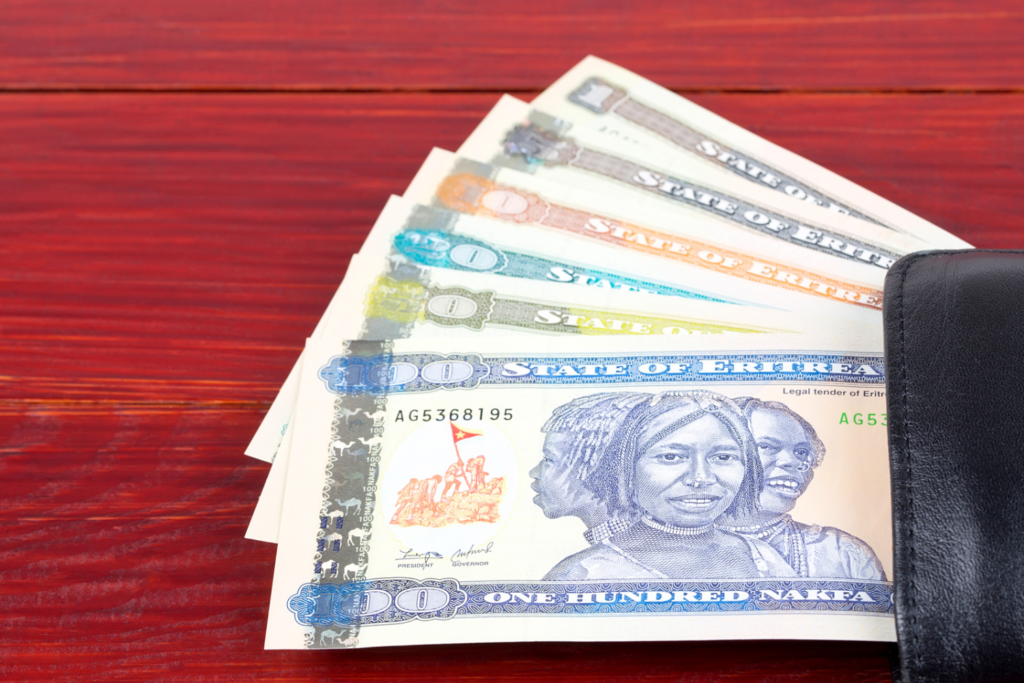
You can’t buy nakfa before you arrive, either, since it isn’t traded outside the country. So you carry dollars or euros in and change them once you land. The nakfa is named after the town where the independence struggle was based, which I like. I still wish it came out of a machine.
Where and How to Exchange
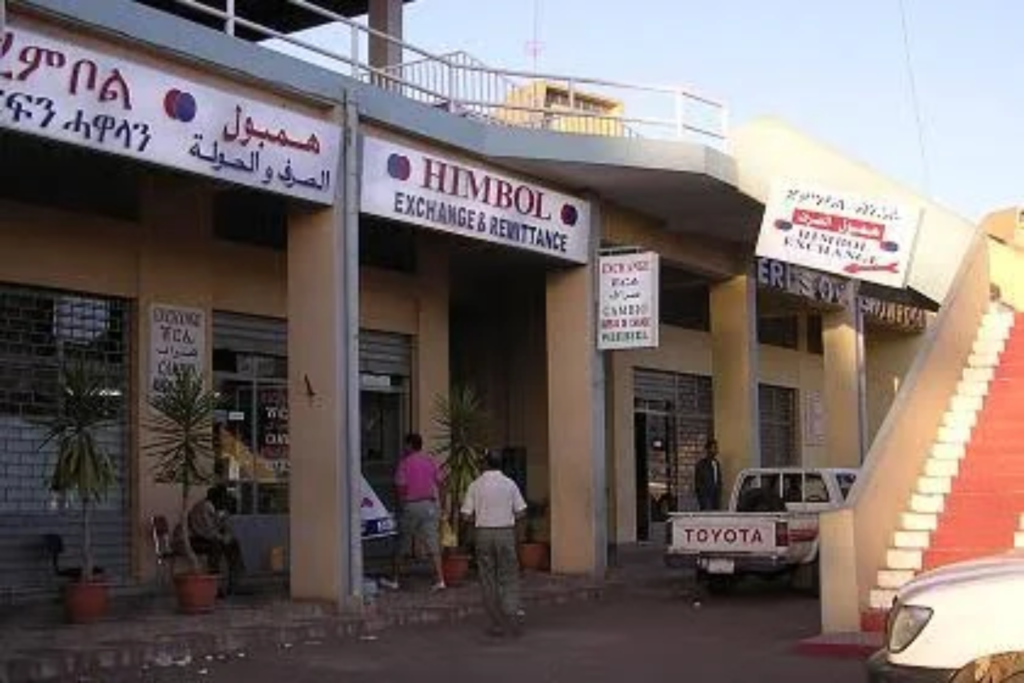
The government exchange is called Himbol. There’s a branch at the airport in the arrivals hall, and others in Asmara, and you’ll need your passport each time. Banks and some hotels also exchange. The rate is fixed at 15 nakfa to the dollar, so there’s no shopping around.
Bring US dollars. Euros are accepted too, but dollars are the easier option. Take clean, undamaged notes, because crumpled or torn ones can get refused.
Keep every receipt. You may be asked to show exchange receipts when you leave, and while you may not be asked, it costs nothing to keep them. Fill in the currency declaration form at the airport too, and hold on to that with the receipts.
Don’t exchange too much at once. Change $50 to $100 first, then top up. Leftover nakfa is quite the challenge to deal with so just exchange what you need.
The Unofficial Rate
You’ll read that the unofficial markets pay far more than 15 nakfa to the dollar. It’s also illegal. The UK and US governments warn that exchanging anywhere but at official outlets risks fines, confiscation or worse, and I wouldn’t gamble a trip over it. Use Himbol.
Outside Asmara, It Gets Harder
Banking outside the capital is extremely limited. If you’re heading to Massawa, Keren or the islands, change the nakfa you’ll need before you leave Asmara, rather than hoping to find an exchange on the road. If you’re doing the trip with a local operator, many of the costs (guide, transport, permits, hotels) are already covered, so your cash goes mostly on food, drinks and small purchases. That’s one more reason to travel with a local ground handler.
What Things Cost
As of this year, a macchiato runs 7 to 10 nakfa, which is under 70 cents. A traditional Eritrean foul breakfast is about 15 to 25 nakfa. A vegetarian lunch is 50 to 70 nakfa (about $3 to $5), and a meat lunch is 100 to 120 (about $7 to $8). A litre of water is 15 to 25, a beer is about the same, and an hour of internet is 15 to 20 nafka . Travel permits are 50 nakfa each, though on Dahlak tours most tours include the travel permits.
Those are the more affordable or cheap parts of it. The only expensive part is the logistics of the cash itself.
How Much Cash to Bring
Three things add up: your tour or accommodation costs, the visa and your spending money.
The visa. Pay the $70 government fee in cash at Asmara airport. Cards aren’t accepted. Carry $80 to $100 in clean notes as a buffer. Our visa guide explains the rest.
The tour fee. On our tours the fee is paid in cash on arrival, so it’s the biggest stack you’ll carry. Our 7-day Dahlak Islands tour, for example, starts from $1,900 a person and includes your guide and driver, transport, permits, Dahlak tax, hotels with breakfast and island camping with meals. Ask before you fly to confirm the amount and currency. If you plan to drive yourself instead, Dahlak Tours car rental page has vehicles and daily prices.
Spending money. My rough maths for a week, on top of the tour fee and visa: about 10 meals at 100 to 120 nakfa is around $70 to $80. Add water, coffee, a beer or two, a few souvenirs and tips, and about $250 to $300 is a comfortable cushion. That’s my estimate, not a rule, so adjust it for how much you eat and shop.
Split your cash between bags and keep it out of sight. Street crime is rare, but a stack of dollars is the one thing you can’t replace on the road.
Leaving With Leftover Nakfa
Nakfa can’t leave the country in any real amount. The UK government says the limit is 1,000 nakfa, and some governments say 500. Above the limit it can be confiscated, and amounts over 5,000 can lead to prosecution under the UK’s guidance.
Don’t rely on the airport to fix it. Some sources say the airport branch limits or refuses reconversion, so change leftover nakfa back at a Himbol branch in town, with your receipts, and spend the rest on your last day or two.
Location
Asmara
Recent Blogs
Frequently Asked Questions
US dollars are best. Euros are also accepted at Himbol. Bring clean, undamaged notes.
The official rate is 15 nakfa to the US dollar, used at banks and Himbol.
Only a small amount, with a limit of 1,000 nakfa (some governments say 500). Spend or convert the rest before you leave.
It isn’t expected, but it’s appreciated for good service.
22
Years of local experience

Licensed by the State of Eritrea, Ministry of Trade and Industry. Licence ASL00031590. Registration ASC00023767.
Dahlak Tours © 2026 All rights reserved. Powered by Debishtech